
Tirzepatide
Compounded tirzepatide is a once-weekly injection that acts on both GIP and GLP-1 receptors. A licensed provider reviews your health screening and decides whether it fits your weight management plan. Available in 4-week and 6-week supplies. Compounded medications are not FDA-approved.
Get Started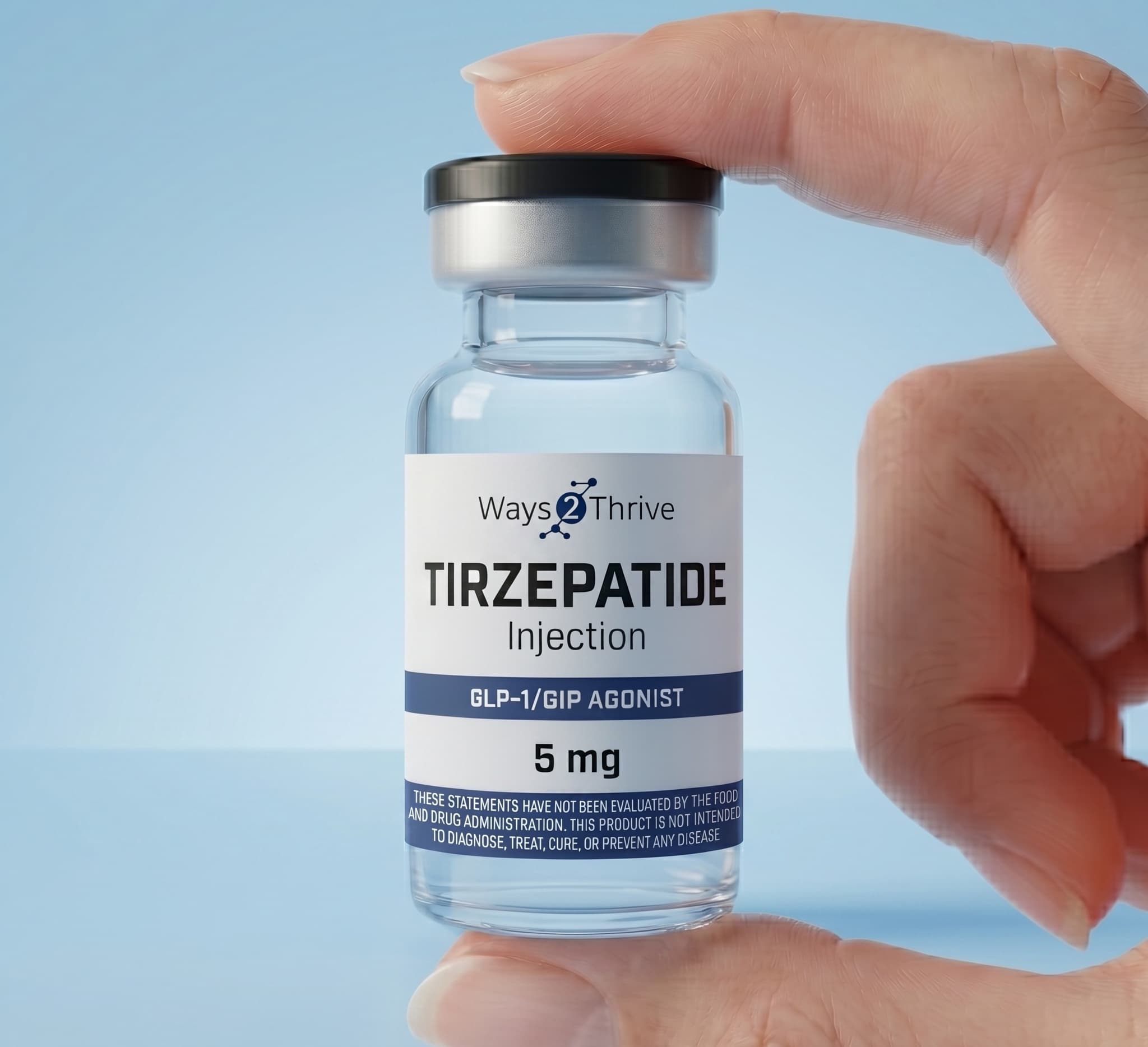
Choose Your Program
Two supply options. Both include provider-guided dosing.
4-Week Starter of Tirzepatide
then $399/month
4-week supply vial
Get Started →Month 1
2.5mg/week
(weeks 1–4)
* That is a typical patient dosing schedule. A licensed provider will determine your final dose and schedule after your consultation.
Compounded medications are not FDA-approved. FDA does not review compounded drugs for safety, effectiveness or quality. Our compounded medications are prepared by a licensed pharmacy for an individual patient, only when a licensed provider prescribes them.
Who It's For
Indicated for adults with a BMI of 30 or greater, or a BMI of 27 or greater with at least one weight-related condition such as hypertension, type 2 diabetes, or high cholesterol. Requires a provider consultation and prescription. Most screenings are reviewed within one business day.
How to Use
⚕Tirzepatide is administered as a once-weekly subcutaneous injection. Protocols begin at 2.5 mg weekly and are titrated upward in 2.5 mg increments every 4 weeks based on tolerability and provider guidance, with a typical maintenance range of 5 mg to 15 mg weekly. Your provider will personalize your protocol based on your health history and goals.
FAQ
Common Questions
How is Tirzepatide different from Semaglutide?+
Tirzepatide acts on two receptors (GIP and GLP-1); semaglutide acts on one (GLP-1). They differ in dosing schedule and side-effect profile. Your provider will recommend one based on your health history.
What should I expect in the first few weeks?+
Your provider starts you on a low dose and raises it gradually to limit side effects. The most common side effects are nausea, diarrhea and constipation. Results vary from person to person, and your provider will check in on how you are doing before any dose change.
Are there side effects?+
The most common side effects are gastrointestinal: nausea, vomiting, diarrhea, and constipation. These typically diminish as the body adjusts and are managed through gradual dose titration. Your provider will review your full risk profile before prescribing.
Do I need labs before starting?+
Your provider will review your health history and may request baseline labs depending on your situation. The intake form captures the information needed to begin the review process. Most screenings are reviewed within one business day.